AIDA — AI Assistant Platform
A full-stack AI platform that enables users to build personalized AI assistants through secure authentication, custom knowledge bases, and context-aware conversations.
- RoleEnd-to-End Product Development
- PlatformFlutter & Backend Platform
- FocusAI, Authentication & Scalable Architecture
Problem
Most AI chatbot applications only demonstrate prompt-response interactions and overlook essential production requirements such as authentication, user personalization, backend security, and conversation management.
Solution
AIDA combines Flutter, Firebase, Node.js, Firestore, and OpenAI into a secure platform where every user owns personalized AI contexts that shape assistant responses.
Users
- • Individual Users
- • AI Enthusiasts
- • Developers
Outcome
A scalable AI platform demonstrating production-ready architecture, secure backend communication, and personalized AI experiences.
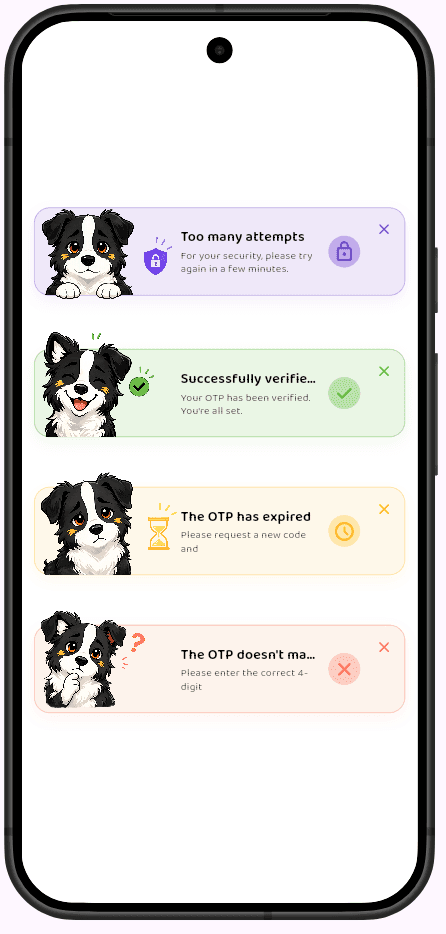
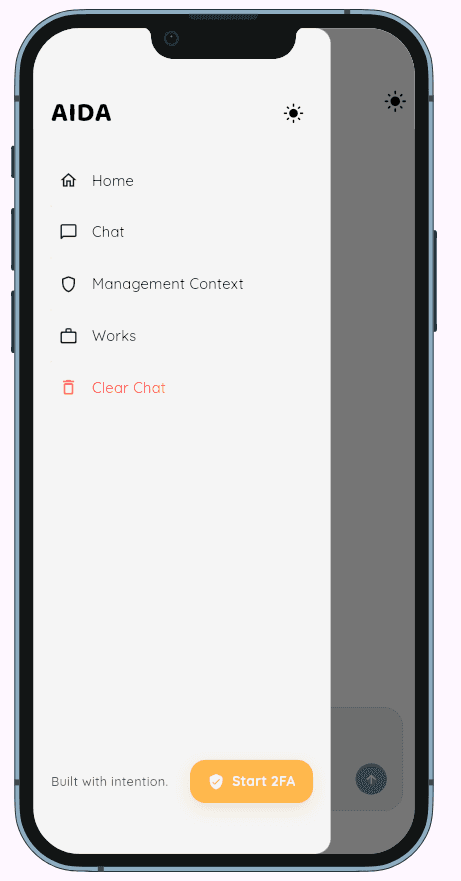
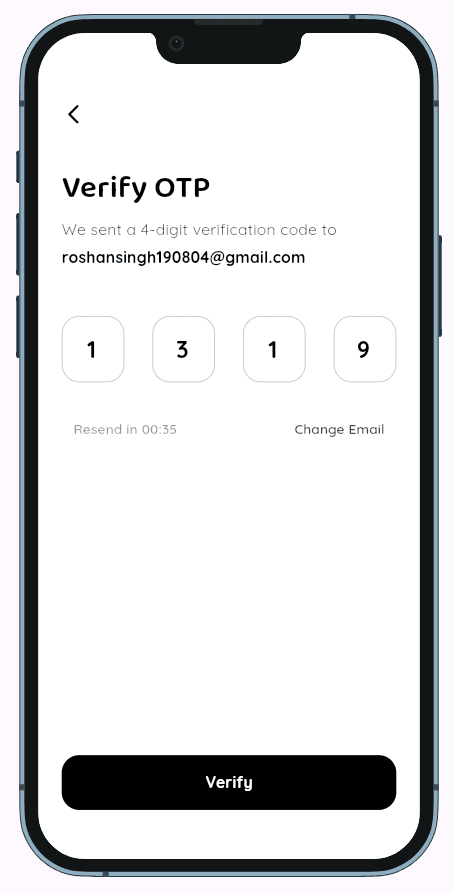
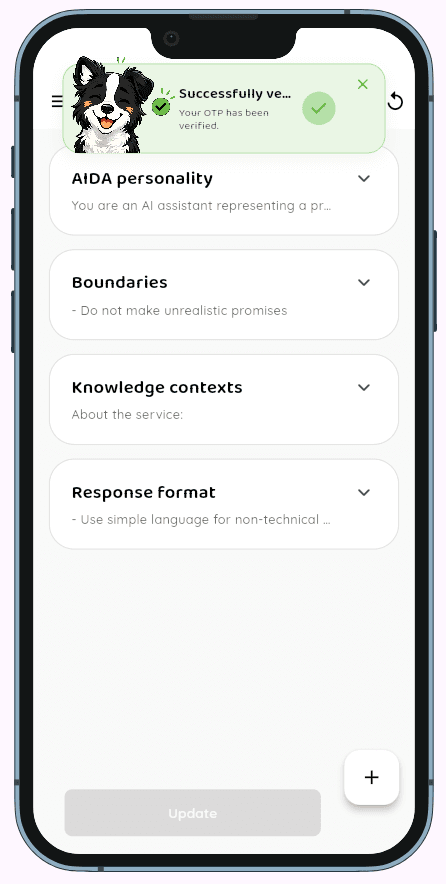
App Previews

Problem breakdown
AI Applications
- • Most examples focus only on sending prompts to an LLM
- • No support for personalized knowledge bases
- • Conversations often lack persistence and context
Security & Backend
- • Authentication and authorization are frequently overlooked
- • Direct client-side AI API access exposes security risks
- • Backend responsibilities become difficult to scale without separation
Scalability
- • Hardcoded prompts limit personalization
- • Feature growth becomes difficult with tightly coupled architecture
- • Managing AI, users, and conversations requires modular services
Design intent
Personalized AI
Each user maintains their own AI contexts, allowing responses to adapt to personalized knowledge instead of relying on static prompts.
Secure by design
Authentication, JWT authorization, and protected backend APIs ensure sensitive operations remain secure while hiding AI provider credentials.
Modular architecture
Authentication, context management, conversations, and user management are separated into independent backend services for maintainability.
Built for growth
The platform architecture supports future capabilities such as RAG, long-term memory, multiple AI models, and AI agent workflows.
User flows
User journey
Goal: Create a personalized AI assistant experience.
- 01
Sign in using Email/Password or Google
- 02
Complete secure authentication
- 03
Create personalized AI contexts
- 04
Start context-aware AI conversations
- 05
Access saved conversations across sessions
The workflow allows users to gradually build a personalized assistant while keeping authentication and AI processing secure.
AI processing flow
Goal: Generate secure, context-aware AI responses.
- 01
Backend validates user identity
- 02
Retrieve personalized contexts from Firestore
- 03
Combine context with conversation history
- 04
Send enriched prompt to OpenAI
- 05
Store generated conversation for future sessions
Centralizing AI processing on the backend improves security while enabling personalized and persistent AI interactions.
Architecture Overview
High-level breakdown of how the system is structured and how responsibilities are separated across layers.
Client Application
A Flutter application built with Riverpod, providing authentication, context management, and conversational AI interfaces.
Backend Services
Node.js and Express power REST APIs responsible for authentication, authorization, user management, conversation management, and AI communication.
Authentication & Data
Firebase Authentication, Cloud Firestore, JWT authorization, and OpenAI work together to deliver secure, scalable, and personalized AI experiences.
Result & Impact
Built a complete AI platform instead of a simple chatbot demo.
Implemented secure authentication and JWT-protected backend APIs.
Enabled personalized AI assistants through user-managed contexts.
Established a modular architecture ready for future AI capabilities including RAG, long-term memory, and multi-model support.
"Want to see more or work together?"
This project reflects how I approach real-world problems — from UX decisions to technical trade-offs. If this resonates, let’s talk.